
Special Issue
Richard Posner(1939-2026)
Economics as the Grammar of Law
A space to read his work, discuss his theses and think about his legacy in Latin America.
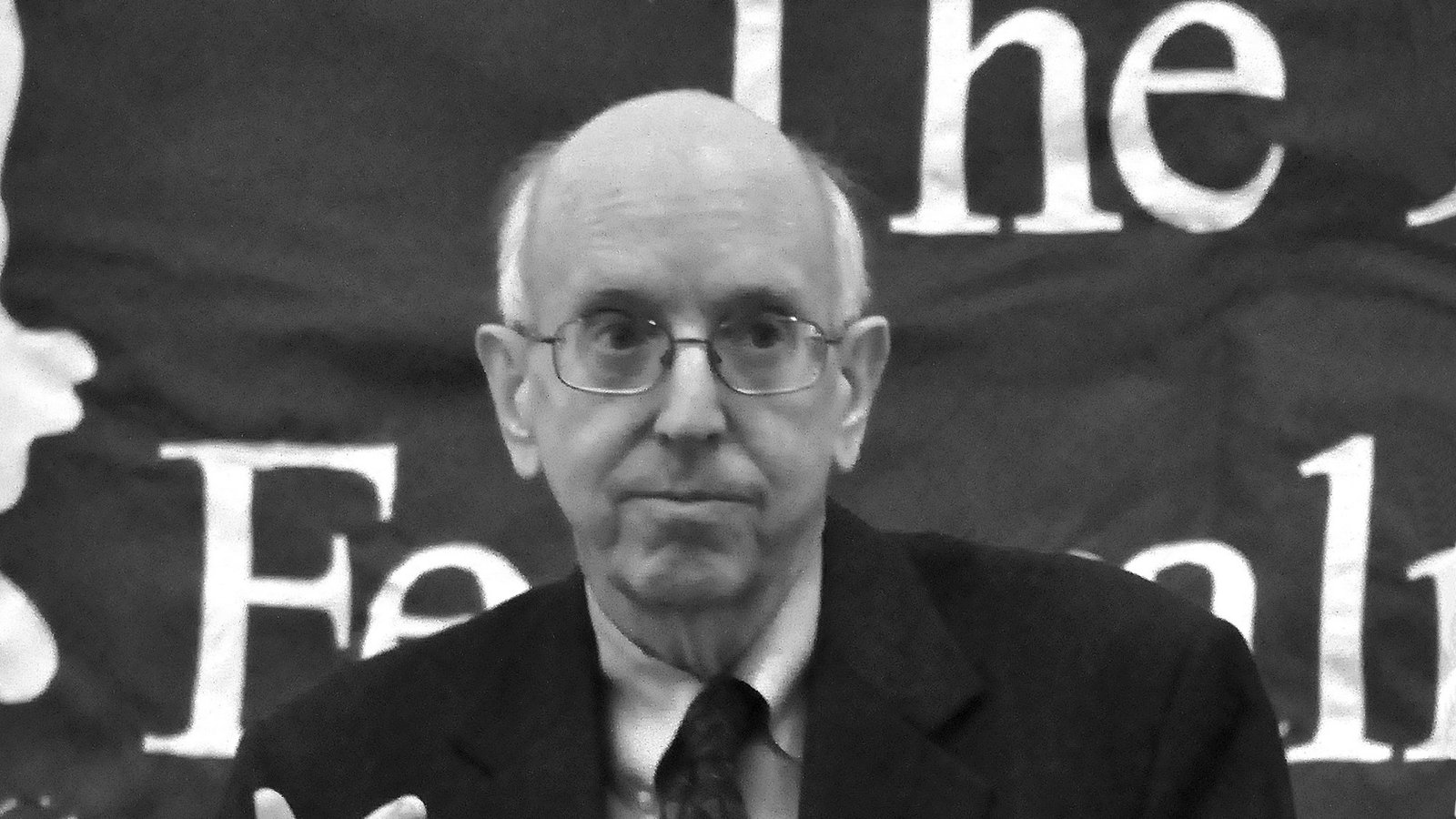
Photo: chensiyuan, CC BY-SA 4.0, Wikimedia Commons. Black and white crop: ALACDE.
Accessibility improves reading.
Preferences are saved on this device.
Special Issue · Editorial
Special Issue: Richard Posner (1939-2026)
Economics as the Grammar of Law
Asociación Latinoamericana y del Caribe de Derecho y Economía
Received: 26 August 2026 · Approved: 2 October 2026 · Published: 12 November 2026
OECD classification: 5.5 Law; 5.2 Economics and Business.
Abstract
Richard Posner died on November 10, 2026. For more than half a century he was one of the central figures of Law and Economics, first as a professor at the University of Chicago and later as a judge on the United States Court of Appeals for the Seventh Circuit. This special issue offers a reading of his work, a selection of his key books and a dialogue with two ALACDE articles that take up his intellectual program. This is not a hagiography. It is an attempt to take seriously his questions about the consequences of legal rules, even when his answers remain contestable. Posner taught that law cannot be understood through its concepts alone, but through the incentives it creates and the effects it produces on people. His legacy invites us to think, rigorously and without reverence, about what it means to do Law and Economics in Latin America.
Keywords: Richard Posner, Law and Economics, legal pragmatism, efficiency, economic regulation.
Introduction
Richard Allen Posner was born in New York on January 11, 1939, and died on November 10, 2026. His intellectual biography deliberately blurs the roles that the academy usually keeps separate: he was a professor, a judge, an editor, a polemicist and the author of nearly forty books. The Journal of Legal Studies identified him as the most cited jurist of the twentieth century. That figure does not explain his importance, but it does suggest the magnitude of a body of work that spanned private law, economic analysis, legal theory, antitrust, regulation and public life.
This special issue does not attempt to summarize that body of work in a few pages. It proposes something more modest and more useful: to offer an entry point, to organize some readings and to show how his questions remain alive in Latin American conversation. Posner was an intellectual provocateur. He wrote with a clarity that is sometimes unsettling and defended theses that he himself revised when the facts ceased to support them. To read him seriously requires distinguishing between method and conclusions, between the question about consequences and the specific answer he proposed.
1. From Yale to Chicago: The Formation of a Perspective
Posner studied English literature at Yale and graduated summa cum laude in 1959. He then entered Harvard Law School, where he served as president of the Harvard Law Review and graduated in 1962. He clerked for Justice William J. Brennan Jr. on the Supreme Court and for Commissioner Philip Elman at the Federal Trade Commission. That combination of literature, law and institutional practice anticipates the style that would make him recognizable: precise prose, curiosity without disciplinary boundaries and a systematic distrust of solutions that do not withstand scrutiny of their consequences.
In 1969 he joined the University of Chicago, the place where economics and law were beginning to converse in a new way. There he coincided with Ronald Coase, Aaron Director and Gary Becker, among others. In 1972 he founded The Journal of Legal Studies, a platform for interdisciplinary research. A year later he published Economic Analysis of Law, the book that would turn a scattered intuition into a research program.
2. The Invention of a Discipline
Economic Analysis of Law was not the first work to apply economics to law. Coase had published The Problem of Social Cost in 1960, and Guido Calabresi had explored the relationship between costs, risks and tort liability. Posner’s merit was systematic: he traversed property, contracts, torts, family, crime, antitrust and regulation with the same question. What incentives does a rule create, and what consequences does it produce? That question, formulated rigorously, transformed the way law is taught and researched.
Posner defended a strong version of economic analysis: efficiency as a normative criterion and wealth as a measure of social welfare. That thesis was criticized from moral philosophy, rights theory and welfare economics. The criticisms were not an accident. Posner himself incorporated them, qualified them and sometimes abandoned them. The vitality of his program resides, in part, in that willingness to argue with his own arguments.
The legacy of the book is not a single formula. It is a discipline that learned to move between positive analysis, which describes how institutions work, and normative analysis, which asks how they should work. In Latin America, that distinction is especially important: rules matter, but so do state capacities, informality and the inequalities that condition their application.
3. The Judge Who Studied Judges
In 1981, Ronald Reagan appointed him to the Seventh Circuit. Posner presided over that court between 1993 and 2000 and remained in the post until 2017. His experience as a judge did not distance him from theory. It made theory more concrete. In texts such as What Do Judges and Justices Maximize? and How Judges Think, he shifted his gaze from rules to the people who apply them. Judges are not automatons. They have incentives, preferences, workloads, reputations and worldviews.
That pragmatic perspective does not imply cynicism. It implies recognizing that law is a human practice and that institutions matter. Posner defended a judicial pragmatism that evaluates decisions by their consequences, but also by their coherence with the system. In his later years on the court he adopted more liberal positions on issues such as same-sex marriage and abortion, which earned him criticism from conservatism. His intellectual independence was, perhaps, his most consistent form of fidelity to theory.
4. An Uncomfortable Intellectual
Posner wrote about animal rights, feminism, drug prohibition, marriage, literature, capitalism and national security. That breadth was not dispersion. It was a single conviction: economic analysis is a tool for thinking about public problems, not an ideology for foreclosing them. In A Failure of Capitalism (2009) he argued that the financial crisis of 2008 required revisiting the assumptions of rationality and self-regulation that had dominated his own formation. Few academics of his prestige are willing to say they were wrong.
His polemical style generated adversaries and disciples. He was accused of reducing law to a calculator and of ignoring income distribution. He replied that a theory that does not confront consequences is an incomplete theory. That tension remains open. The special issue does not resolve it. It turns it into a productive question.
5. Posner in ALACDE
ALACDE’s conversation with Posner is not new. Two articles published in the ALACDE Forum show how his program translates into concrete problems.
Both works show that Posner’s agenda is not limited to importing formulas. It is about asking how rules work in contexts of inequality, informality and institutional distrust. That is, perhaps, the most valuable contribution of his method for Latin America.
Other ALACDE readings engage with that tradition: The Arbitrator before the Rules of Competition, by Antonio Robles Martín-Laborda, and Blank Criminal Law and Open-Ended Offenses in the Economic Analysis of Law, by Rafael Vega Llapapasca.
6. Key Works
Economic Analysis of Law
The book that systematized the economic analysis of law and turned it into a recognizable discipline.
The Economics of Justice
A defense of efficiency and wealth as criteria of justice, with its tensions.
The Problems of Jurisprudence
A pragmatic critique of legal theories that ignore consequences.
Sex and Reason
A polemical exercise in economic analysis applied to sexuality and law.
Antitrust Law
An economic reading of competition law, its institutions and its remedies.
How Judges Think
A realistic theory of judicial behavior and the incentives that shape it.
A Failure of Capitalism
A self-critique of the model of rationality and self-regulation in the face of the 2008 crisis.
Reflections on Judging
A retrospective look at the practice of judging and the limits of theory.
7. Conclusions
Richard Posner leaves an enormous body of work and an uncomfortable lesson. Law cannot be understood without consequences; economics cannot be understood without institutions. His project was not a compact ideology but a demanding conversation among disciplines. That conversation remains open.
In Latin America, reading Posner does not mean adopting his answers. It means taking responsibility for his questions: what incentives does a norm create, who bears its costs, what institutions make compliance possible and what price does efficiency exact when inequality is structural. The best way to honor his legacy is to discuss it with the same freedom with which he discussed it with himself.
Bibliography
Posner, R. A. (1973). Economic Analysis of Law. Little, Brown.
Posner, R. A. (1981). The Economics of Justice. Harvard University Press.
Posner, R. A. (1990). The Problems of Jurisprudence. Harvard University Press.
Posner, R. A. (1992). Sex and Reason. Harvard University Press.
Posner, R. A. (2001). Antitrust Law (2.ª ed.). University of Chicago Press.
Posner, R. A. (2008). How Judges Think. Harvard University Press.
Posner, R. A. (2009). A Failure of Capitalism: The Crisis of 2008 and the Descent into Depression. Harvard University Press.
Posner, R. A. (2013). Reflections on Judging. Harvard University Press.
Coase, R. H. (1960). The Problem of Social Cost. Journal of Law and Economics, 3, 1-44.
Calabresi, G. (1961). Some Thoughts on Risk Distribution and the Law of Torts. Yale Law Journal, 70(4), 499-553.
Méndez Reátegui, R. (2026). La Nueva Frontera del Law and Economics. ALACDE. https://asociacionalacde.org/la-nueva-frontera-del-law-and-economics/
Linares Cantillo, A. (2025). Neoconstitucionalismo y análisis económico del derecho de contratos en Colombia. ALACDE. https://asociacionalacde.org/neoconstitucionalismo-analisis-economico-contratos-colombia/
Robles Martín-Laborda, A. (2026). El árbitro ante las normas de competencia. ALACDE. https://asociacionalacde.org/el-arbitro-ante-las-normas-de-competencia/
Vega Llapapasca, R. (2025). La ley penal en blanco y los tipos abiertos en el análisis económico del derecho. ALACDE. https://asociacionalacde.org/ley-penal-en-blanco-tipos-abiertos/